

The Timeless Wardrobe Essential Is a Lie
How the language of intentionality became one of the industry’s best growth strategies

I sometimes step back and realize that much of my work (and therefore my writing) comes back to one core idea: fashion is built to sell.
That’s it! Feels disappointingly obvious, right? Except for when we forget. Which, based on how much we seem to all be struggling with “finding our personal style” or “a closet full of clothes but nothing to wear” might be more than we’d like to admit.
The industry is a finely oiled machine, designed top to bottom to keep you buying. That’s the reality of the current business model, and so on its own, that’s not what gets under my skin.
What sucks the soul out of my body is when fashion insists it’s the thing helping you opt out of that system when the act of “resistance” is only pulling you further in.
Enter: the timeless wardrobe essential.
It’s pitched as a way to buy less. But usually, it really only results in buying more. Which is exactly why brands have so widely adopted the language as their own.1 Those who profit from consumption don’t tend to voluntarily promote narratives that slow it down.
This is how the timeless wardrobe essential became one of fashion’s most effective lies.
The promise of the timeless wardrobe essential boils down to: “sure, this might feel like a hefty price tag right now but DO NOT WORRY. It’ll absolutely, positively be totally worth it because it is:
an “essential”, so you’ll surely wear it super often, and
“timeless”, so you’ll surely wear it for the next 50 years or right up till the moment you drop dead (whichever comes first)
Add up all those (imagined, future) wears and [this $500 nondescript cardigan] is actually a very, very smart investment!”
That’s the concept we’ve bought into.
We’re living in a moment where many feel squeezed from every direction: wages lagging, costs rising, and our attention constantly monetized. In that context, the ever-rising desire to see ourselves as “smart consumers” is super understandable. It’s less about virtue and more about self-defense.
But this consumer trend puts fashion brands in a pickle, as their continued existence depends on us continuing to buy. And so what’s emerged is the “timeless essential” permission structure, designed by fashion to offer a very comforting workaround: you can actually just buy your way out, and this time will be totally different. They invented a scenario where continuing to consume is actually your best path to feeling responsible, disciplined, and smart.
I’ve seen this shift from the inside. Brands can feel it. Customers who once acted like cheerleaders now feel more like critics. Every purchase feels much more closely evaluated. There’s a growing segment of their base who now identify more as “intentional shoppers,” and no longer “fashionistas.”
In the face of this, many brands are choosing to lean in. In the short term at least, it feels so much easier to “yes, and” these customers.
“Yes! We totally hear that your closet is already full of crap you don’t wear from those other nasty brands, and this one is different! We’ve done all the thinking for you and [this nondescript cardigan] is foolproof designed to last.
It’s an intentional strategy which to some degree loops back into product design, so that they can somewhat credibly market these items as “timeless” and “essential”.
And look: I’m not saying it’s necessarily a bad thing for more products to be designed with potential longevity in mind, versus simply pumping out the latest micro-trends. But this impulse almost always creates direct tension with what is known to “drive the business”.
Emails with “new!” in the subject line get the highest open and click rates.
The “new arrivals” section is by-far the most trafficked page on the website.
Whenever there is new stuff to talk about, revenue spikes. This is universal, considered near-gospel.
And taken together, this dynamic creates pressure for brands who attempt to center this flavor of intentional consumerism in their identity to devolve into what I lovingly call ”timeless essentials soup”.
A high-volume churn of “forever pieces” that all individually promise longevity but blur together into one humongous greyish-oatmeal-colored mass. Inoffensive and just barely differentiated enough to justify one more SKU. These brands continue to pump out frequent drops to manufacture newness for the business.2 But if every piece must also optically pass the “timeless” test, nothing can appear too bold or specific. A veritable mountain of product all converging toward the same safe middle.
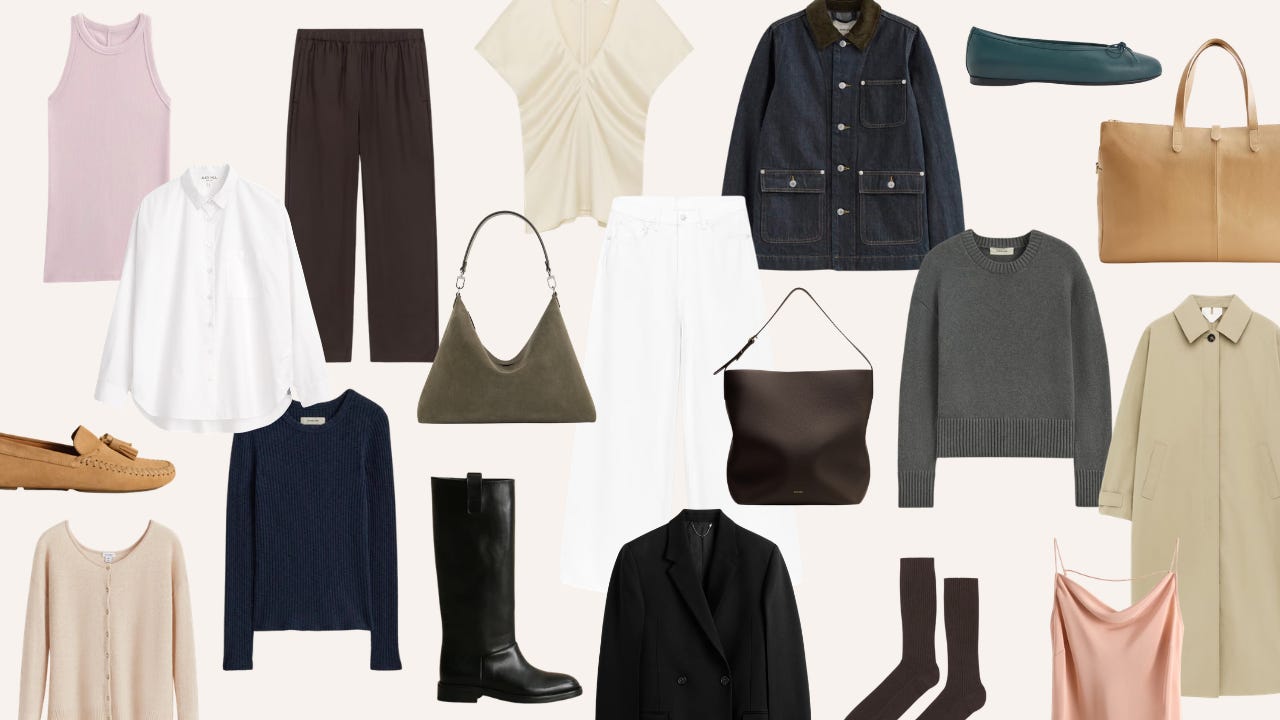
This image has pieces from Quince, Everlane, Arket, Cuyana, Jenni Kayne, Alex Mill, and Toteme. Can you tell which pieces belong to whom? Exactly.
To be very clear: it is not inherently wrong to shop from any of these brands, nor are any of these items inherently bad. I chose these items precisely because I kinda like them myself!
But there is a problem when you buy these pieces on the premise of them being “smart investments” and yet you still have a growing graveyard of them sitting in the back of your closet (or already quickly passed through the donation pile). And I know that you do!!3 There’s a simple reason why, and I’ll hold your hand while I say this:
There is no such thing as a timeless wardrobe essential.
Or to be more specific, there is no such thing as “timeless” OR “essential” being innate to an item. Your timeless wardrobe essential is not my timeless wardrobe essential, and so it is impossible to universally market any one item as such.
I’ll also point out that there is almost nothing that fashion itself holds as “timeless”, even by it’s own definition. I’ve written about this (via Indyx) before, but allow me to offer this one simple example.
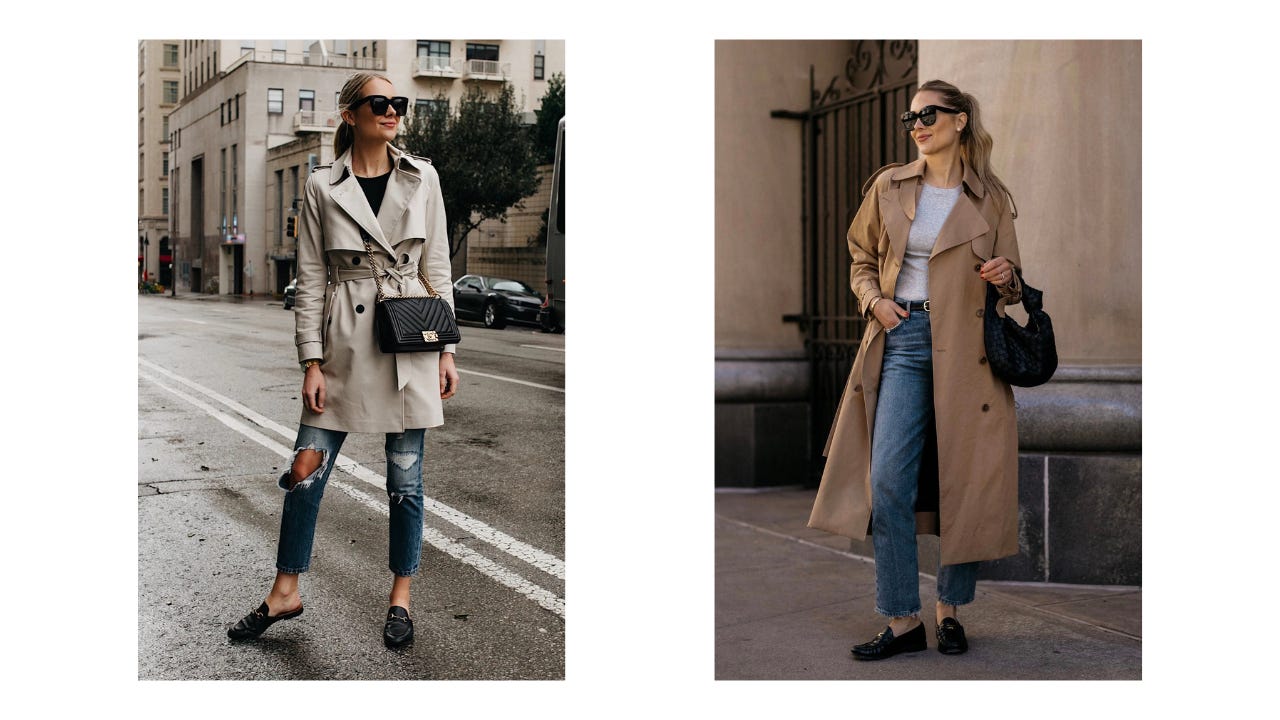
The supposedly “timeless” trench coat, less than 10 years apart and yet completely different. While the “trench coat” as a category may always have a version being currently sold in stores, there are also always elements of the silhouette or detailing that come in and out of trend. They will always want to sell you the new one!
This may, at first, feel deflating. But let me flip it around: timelessness is a decision that YOU get to make. It’s the conscious choice to keep rocking a piece, even after it may fall out of mainstream favor, because it is so special to you and your personal style.4
As a marketing concept, the timeless wardrobe essential also trades on the illusion that we can predict our future feelings—that it’s somehow inevitable that you’ll still want to wear [this nondescript cardigan] in 5, 10, or 20+ years. The reality is that you can barely predict how you’ll feel about eggs for breakfast tomorrow.
Unfortunately, humans have remarkably little predictive power and the problem only multiples the farther out you try to project.
And so, if you value sustainability or even just “getting your money’s worth”, I’d 1,000 times over rather you place a bet that you will wear a thing very often for the next 1-2 years than that you will sometimes wear a thing over an unbounded number of years. Because you have much greater ability to accurately predict how you’ll feel about something over the next two years than in twenty.
In other words: front-load your wear expectations. If you still love it in five years and it becomes clear, in retrospect, that the item is “timeless” to you, that’s fantastic! Keep wearing it. If five years from now trends have shifted and it no longer excites you, that’s fine, too—you already got your wear out of it, instead of needlessly taking out debt against yourself on some future promise.
Of course, making good on this strategy requires committing to a somewhat more limited closet. The more pieces you have, the less consistent airtime any one of them can receive. I hear this as one of the most consistent realizations from folks who have digitized their closet on Indyx: when you see it all laid out in front of you, “so many pieces, so little time” suddenly becomes very obvious. Each new piece you add may actually jeopardize your ability to get the value you wanted from what you already have.
And so my advice is this: buy what you like and feel that you will wear often now. As buying into something primarily because it’s meant to be a timeless wardrobe essential nearly pre-determines that it will be the opposite. You cannot force “timelessness” onto something you never even liked that much in the first place!
This is not to say that basics aren’t important. They are. But you need to decide which basics are relevant to you and which feel good to wear right now. Not the ones someone else insists will (maybe) matter someday, under very specific future conditions.
As further evidence that timeless wardrobe essentials can only be: 1. defined by you, 2. in retrospect, here are some of the actual items that have stuck around in my closet for 10+ years.
(and, I’d be curious to hear about the patterns in yours, too!)
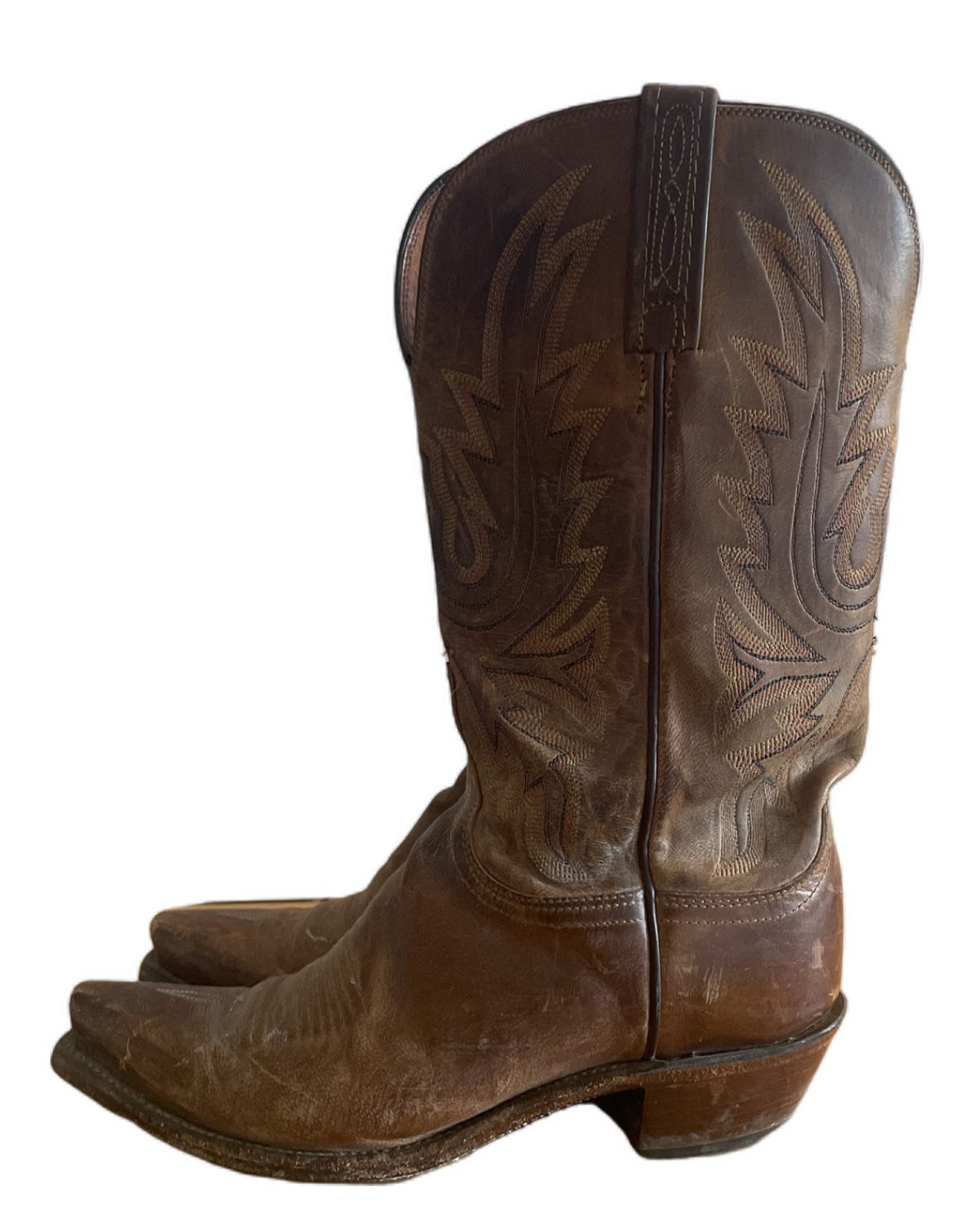
Cowboy Boots: my mom took me to buy these in high school, because as a Texan wearing cowboy boots to the football game on Friday was the thing to do. We went down to Cavender’s Boot City5, and she pulled out proper Luccheses for me (none of this newfangled Tecovas bullshit, IYKYK). It was almost a coming of age thing, and I’ll hold onto them forever, just to hold on to that piece of myself.
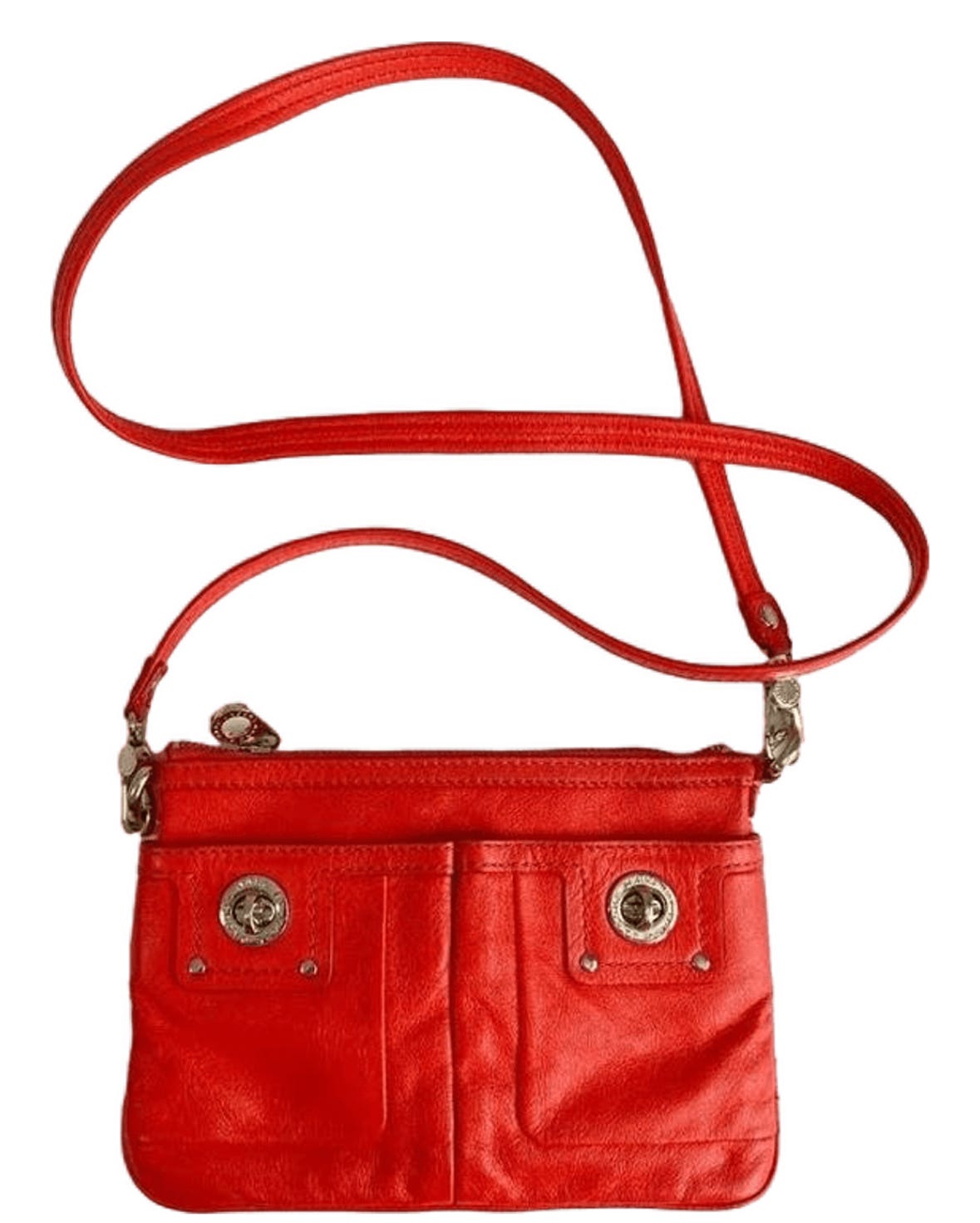
Marc Jacobs Bag: one of my earliest “big” fashion purchases for myself with my own money, from a time I feel fond nostalgia for (the late 2000s when crossbody bags were THAT GIRL). In a color that (in hindsight!) has emerged as a go-to accent that I come back to again-and-again.
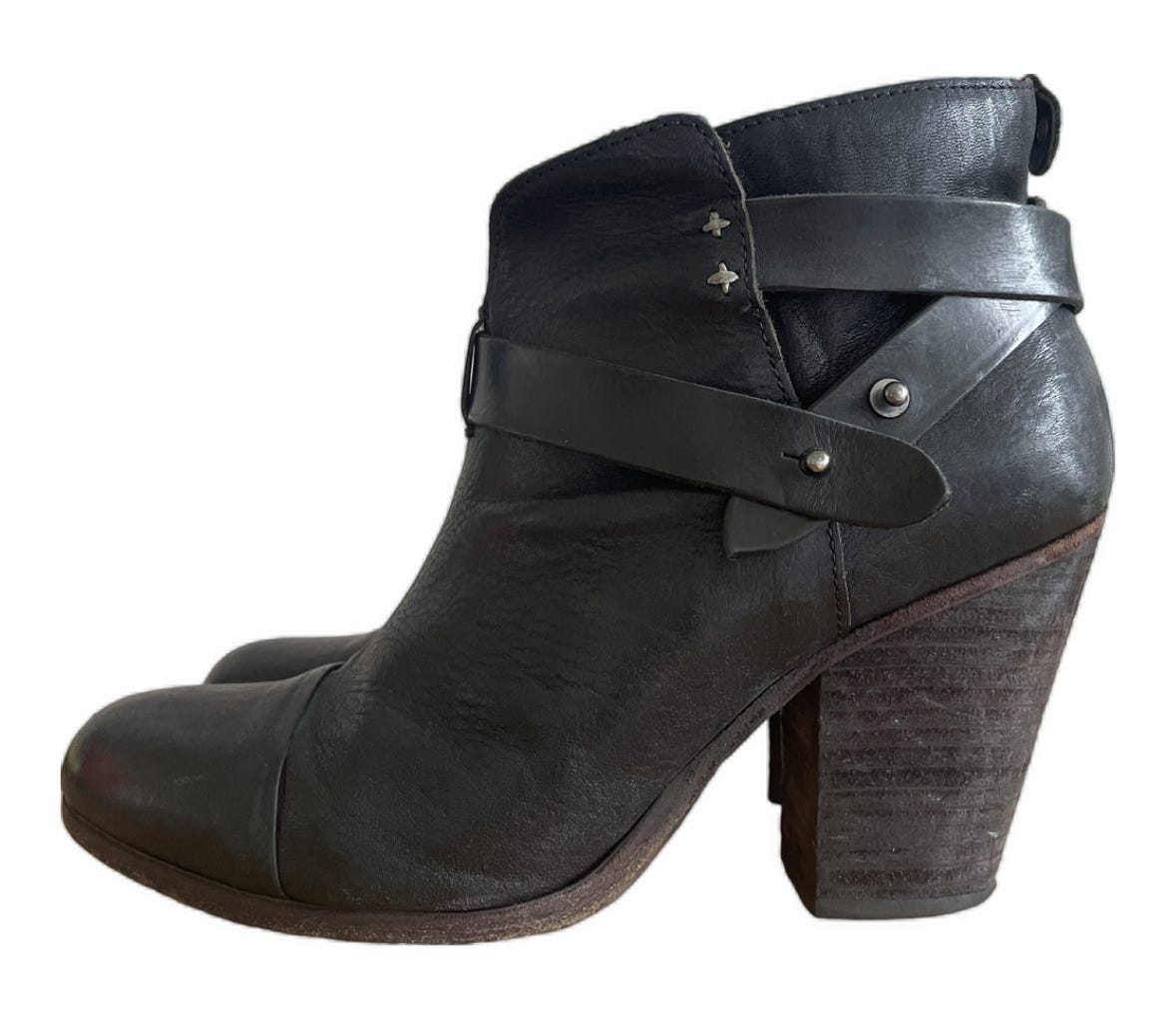
Rag & Bone Boots: I took a whole $550 + tax (!!!) out of my first real big-girl paycheck and slammed it down on the metaphorical nordstrom.com counter for these.6 I remember that they helped me feel confident in those early days when I really didn’t know anything at all.
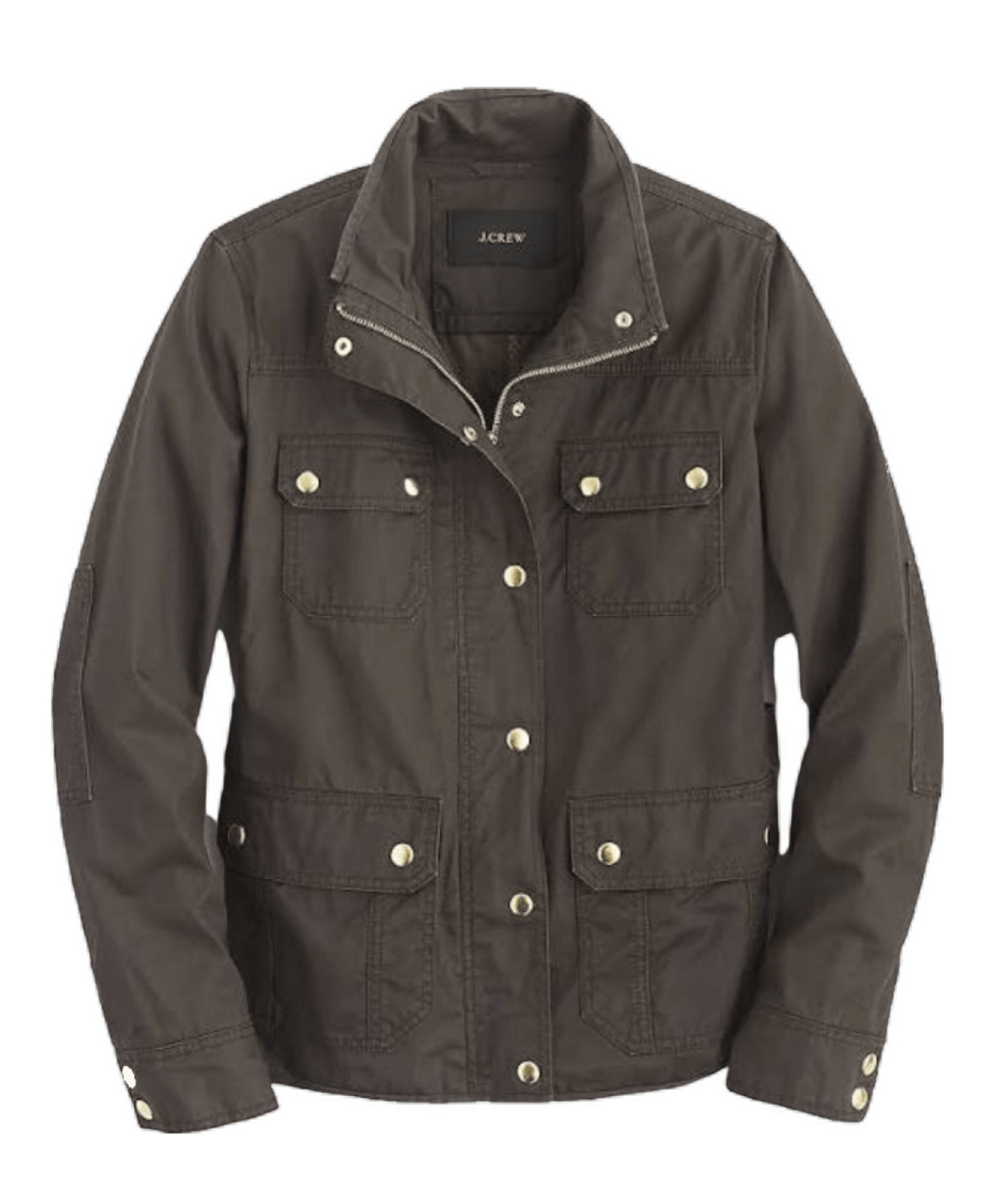
J.Crew Field Jacket: worn constantly circa 2014-2019. It’s just of a time, you know? Unlike the others on this list, I haven’t actually worn it in ~5 years. But I still can’t and won’t let it go because it feels so enmeshed with my personal history. And I still have belief that the trend cycle will do it’s thing and it’ll one day feel wearable to me again. It might not!!! And I’m okay with that.
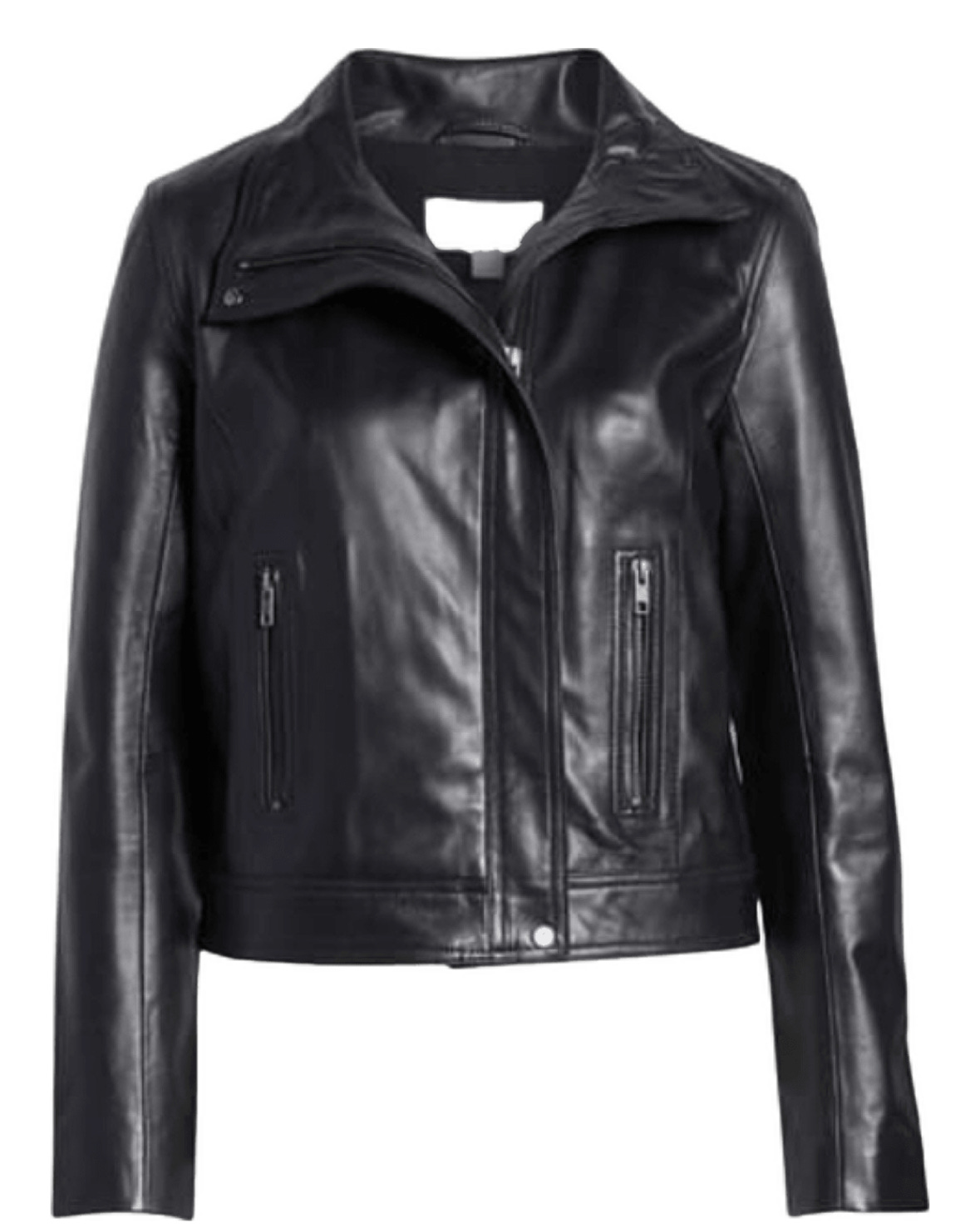
Leather Moto Jacket: This is maybe the most classically “wardrobe essential” entry on this list, and it’s also the one I contemplate moving on from the most! It mostly sits over my head in my closet as something I “should” wear more, and I think that in itself kinda says something.
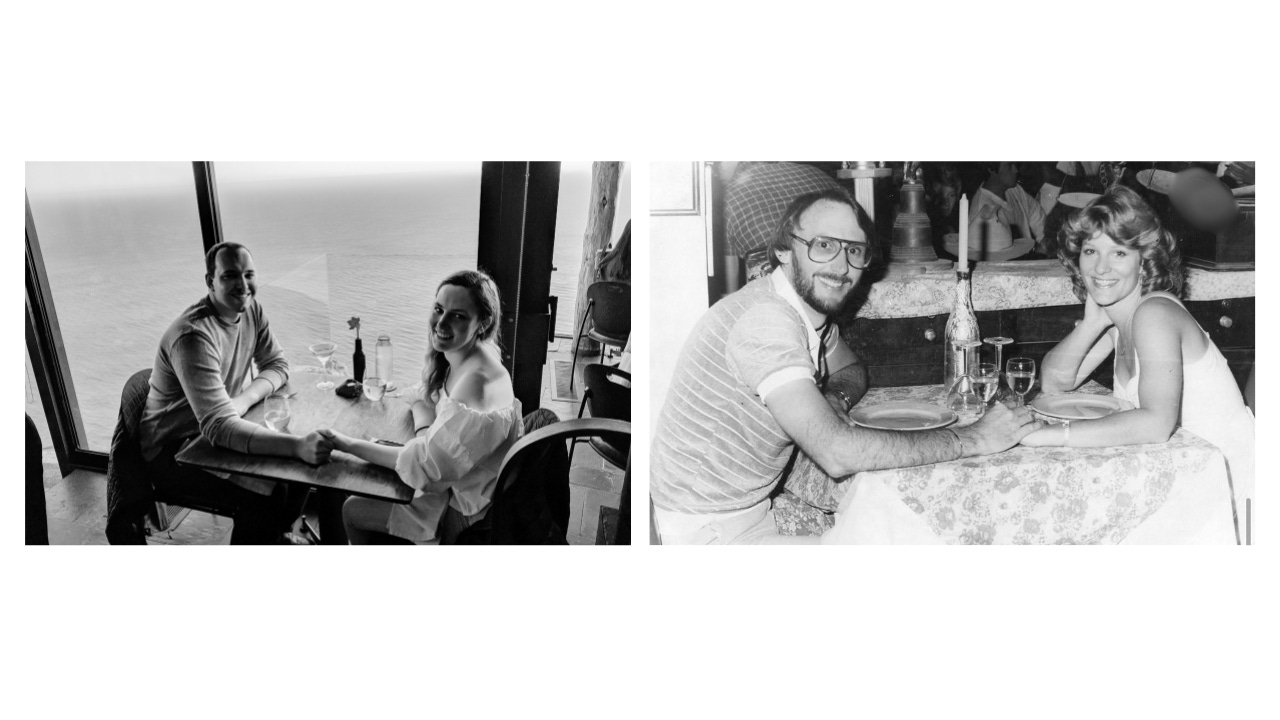
This white top: I mean, we already kinda know that white tops in general are my thing, but this one was memorably worn on my honeymoon. See:
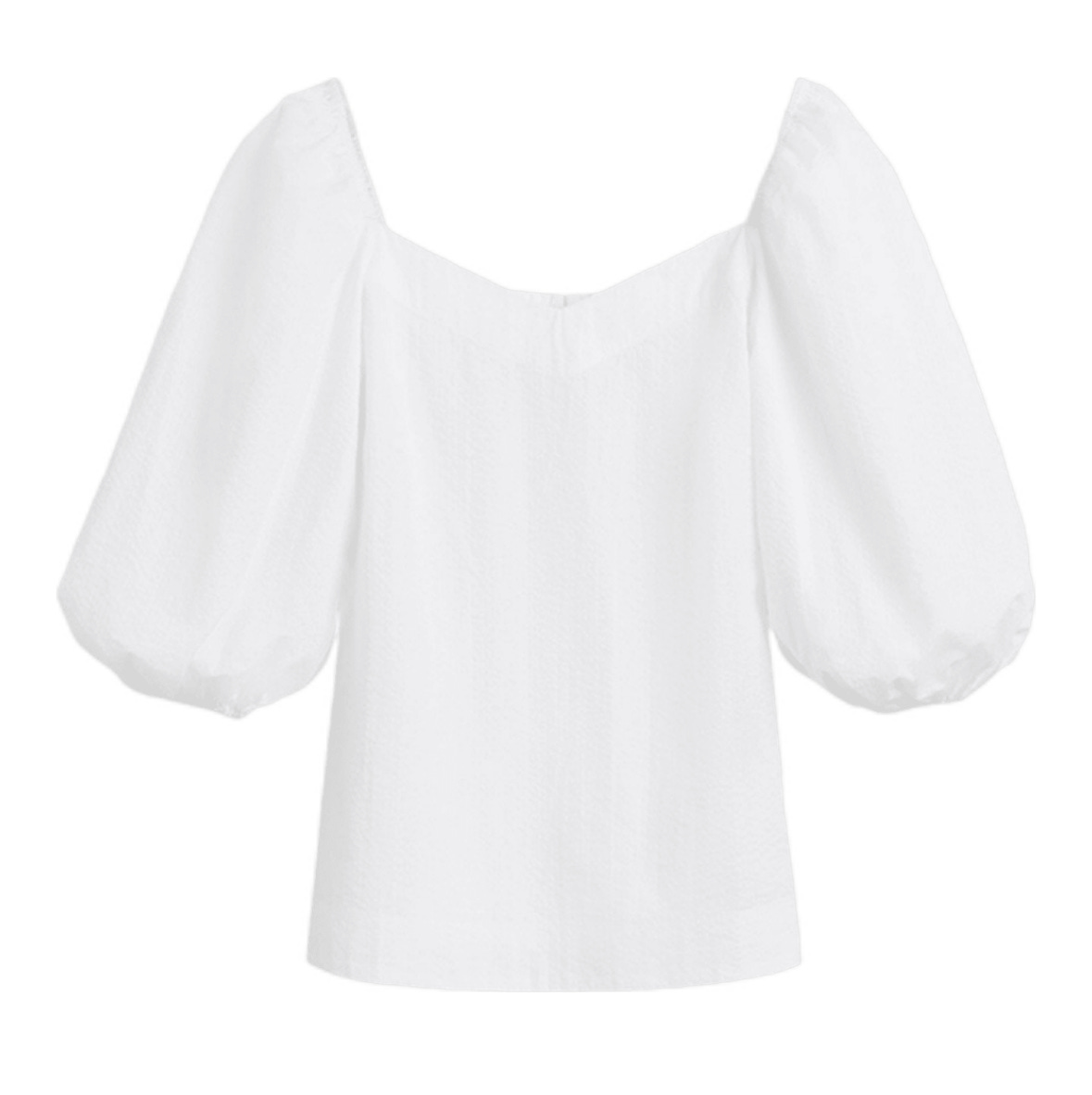
The biggest common thread? They are sentimental! They matter to me and my personal history in a way that actually only needs to make sense to me and nobody else, okay?
This is not a fluke. It is not because I didn’t buy enough items labelled as “timeless essentials” or that the “timeless essentials” I bought weren’t actually timeless enough (try harder next time!!).
This is just what true timeless essentials look like in the real world.
And so, friends, this is why my ears now perk up at the first mention of “timeless essential” coming from…well, nearly anyone (brands and influencers included). It’s an immediate red flag, and at this point I essentially consider it greenwashing.
Brands quickly learned that hard sustainability claims may prompt awkward follow-up questions on specifics surrounding materials and factories. But “timeless essential” claims — which gesture towards the same underlying anti-consumption thrust — remain unimpeachable. Because who could possibly know?!7
To be fair, there’s definitely a “closing the loop” gap here: brands legitimately have zero visibility into how their pieces are actually being worn (or not…). You could argue that the fact they are succeeding in endlessly dropping brand new “timeless essentials” should be a strong tip-off….but I’ll have to put that to the side. The lack of visibility into actual use enables the fantasy to persist. It is my hope that one day some (very anonymized!) data from Indyx could play a role here.
Would this meaningfully change their behavior? Idk. Perhaps it would help brands double down on product that’s actually proving itself in real-life wear and prune out the imposters that mostly just leave customers disappointed. But the core issue is still that they must keep selling to exist (let alone grow)8. Maybe this visibility could grant them some freedom to be more honest about it — and therefore escape the “timeless essentials soup” dynamic and at least offer us something interesting once in awhile.
Ultimately, it comes down to us. If we genuinely want brands to stop producing so much stuff, we have to stop buying so much stuff.
And so, consider this your permission slip to break free from the time-bending prison that is the timeless wardrobe essential. Don’t let anybody boss you around! Buy what you like. Create memories while you wear it. End of.
I’ll offer a few A+ “timeless essential” word salad captions that I’ve seen on IG recently, from brands who will (for now) remain nameless. I must emphasize that what you read here is truly the entire caption.
“An exquisite combination of elegance and practicality results in the most effortless option for your daily essentials.”
“The perfect knit has arrived. The [product name] blends luxuriously soft merino wool with a timeless silhouette for an effortless transitional staple.”
“Layered with intention, worn without effort, designed to elevate your everyday.”
And, perhaps my personal favorite: “Winter, curated with intention.”
HUH??????
This is, of course, a tell in itself. If you were genuinely selling “timeless essentials,” nobody would need a fresh batch every six weeks. The math doesn’t math. And yet the new drops keep performing, not because customers’ wardrobes are continually “incomplete” but because their closets are still continually churning.
This is me, peering through the screen at you 👀
And no, it is not necessarily better or more virtuous to choose this for everything you buy. IT IS OKAY to have things in your closet that are temporal. That’s how you keep the stuff you choose to keep as “timeless” looking fresh, current, and cool; like personal style and not a time capsule. It is especially okay to have temporal pieces if you actually get your wear out of them, upfront early in their life with you.
If you can believe that such an establishment even exists
It’s basically a law of shared girlhood that we all have a story like this, right?
(read with sarcasm)
I think that meaningful change to the industry will require a shift in business model for brands from pure product slinging to…at least in part, something else. Maybe something experiential, tied to helping customers get more delight out of their closet rather than just add to it. For this to work, customers will, of course, need to be willing to shift some amount of spend from buying sweaters to buying these services/tools. This is largely unproven, but is basically the underlying bet behind Indyx’s business model—and, is something I hope that Indyx can one day help brands transition towards.
on this, everything I have gotten many many years of regular wear out of has been more of a statement piece than a basic. I’m just a lot more likely to build looks around things I see as weird and cool rather than something I see as interchangeable
I have almost started to hate the word "intentional". Not because it's a bad thing, but it feels more like a lifestyle add than something I can relate to. It feels as meaningful as a tv-commercial for perfume.